
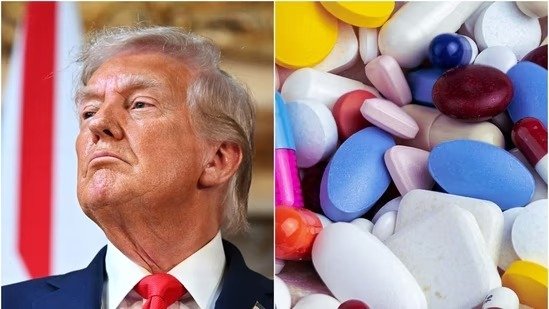
In a bold move to reshape America’s economic landscape, former President Donald Trump has floated the idea of imposing a Trump’s Massive Tariff—a staggering 100% duty on pharmaceutical imports. Announced amid his 2024 campaign rhetoric, this proposal aims to shield domestic industries and reduce reliance on foreign drug supplies, particularly from China and India. But as whispers of Trump’s Massive Tariff turn into policy thunder, the healthcare world braces for turbulence. Could this be a game-changer for U.S. manufacturing, or a recipe for skyrocketing drug prices and global trade wars? In this blog, we’ll dissect the proposal, its potential fallout, and what it means for patients, pharma giants, and the economy.
Why This 100% Tariff on Pharma Imports?
The core goal of this US pharma tariff 2025 is national security and economic revival. Trump argues that heavy dependence on imported pharmaceutical products—with the US importing nearly $233 billion worth in 2024—poses risks to health and supply chains. By slapping a 100% duty on drug imports, companies face doubled costs unless they build factories in the US. It’s part of Trump’s broader America First trade policy, using Section 232 of the Trade Expansion Act to justify the hikes amid ongoing Commerce Department probes into import threats.Lorem ipsum dolor sit amet, consectetur adipiscing elit. Ut elit tellus, luctus nec ullamcorper mattis, pulvinar dapibus leo.
The Roots of Trump's Massive Tariff: Protectionism in Action
Trump‘s tariff playbook isn’t new—recall the steel and aluminum duties during his first term—but targeting pharma imports elevates the stakes. Speaking at a recent rally in Pennsylvania, Trump declared, “We’re going to bring drug manufacturing back home with tariffs so high, no one will want to ship here.” The 100% tariff would apply to finished drugs, active pharmaceutical ingredients (APIs), and generics, hitting nations like India (which supplies 40% of U.S. generics) and China (source of 80% of global APIs) hardest.
Proponents of Trump’s Massive Tariff argue it’s essential for national security. The COVID-19 pandemic exposed vulnerabilities: Supply chain disruptions led to shortages of everything from antibiotics to cancer meds. A 2023 FDA report highlighted that 72% of essential medicines rely on foreign imports, making the U.S. susceptible to geopolitical risks. By slapping on Trump’s Massive Tariff, Trump envisions a “Made in America” pharma boom, creating jobs and bolstering self-reliance. The pharmaceutical industry, already a $500 billion behemoth in the U.S., could see a renaissance in domestic production.
Skyrocketing Costs: The Patient Pain from Trump's Massive Tariff
While the intent behind Trump’s Massive Tariff sounds patriotic, the reality for everyday Americans could be brutal. Drug prices, already among the world’s highest, might surge by 20-50% if tariffs pass costs to consumers, according to a preliminary analysis by the RAND Corporation. Generics, which make up 90% of U.S. prescriptions and save $313 billion annually (per AARP data), would be hit hardest. Imagine paying double for statins or insulin—lifesaving meds could become luxuries.
Supply chains would scramble too. Pharma companies like Pfizer and Eli Lilly, which outsource to cut costs, warn of delays and shortages. A 2024 Brookings Institution study estimates Trump’s Massive Tariff could add $100 billion to annual healthcare spending, exacerbating the opioid crisis and chronic disease burdens. For low-income families, this means tougher choices: meds or meals? Critics, including the American Medical Association, call it a “tax on health,” arguing it ignores how tariffs inflate import costs without guaranteeing quick domestic alternatives.
Boosting Domestic Pharma: The Upside of Trump's Massive Tariff
Not all views on Trump’s Massive Tariff are doom and gloom. Advocates point to success stories from Trump’s earlier tariffs, like the resurgence in U.S. steel production. In pharma, incentives could spur innovation: Tax breaks paired with tariffs might encourage biotech hubs in states like North Carolina and Massachusetts to expand. The Biosecure Act, already in Congress, complements this by restricting Chinese involvement in U.S. drug R&D.
Economically, Trump’s Massive Tariff could generate revenue—potentially $50-70 billion yearly, per Tax Foundation estimates—funding infrastructure or subsidies for American factories. Companies like Moderna, fresh off COVID vaccine triumphs, could scale up, creating 100,000+ jobs in high-tech manufacturing. Globally, it pressures trading partners to negotiate fairer deals, aligning with Trump’s “America First” ethos. If executed with carve-outs for critical drugs, Trump’s Massive Tariff might just fortify the U.S. against future pandemics.
Global Ripples and Retaliation: Trump's Massive Tariff on the World Stage
Trump’s Massive Tariff isn’t isolated—it’s a potential flashpoint in international relations. India, the “pharmacy of the world,” has already signaled retaliation, possibly hiking prices on U.S. exports like tech and agriculture. China, Trump’s frequent tariff target, could escalate trade tensions, disrupting everything from electronics to rare earths used in drug production.
The World Trade Organization (WTO) might cry foul, labeling it a violation of free trade rules, leading to disputes that drag on for years. European allies, reliant on U.S. markets, could face collateral damage if pharma prices rise worldwide. A 2023 Peterson Institute report warns that full implementation of Trump’s Massive Tariff could shave 0.5% off global GDP growth. Yet, Trump dismisses such concerns: “Tariffs are the most beautiful word,” he quipped, betting on renegotiated deals to soften blows.
Navigating the Future: Will Trump's Massive Tariff Heal or Harm?
As election season heats up, Trump’s Massive Tariff remains a hot-button issue, with Biden’s administration countering via subsidies under the CHIPS and Science Act to onshore pharma without blunt tariffs. If Trump wins in 2024, expect phased rollouts with exemptions for allies, but the core 100% levy could debut by 2025.
Experts urge balance: Pair tariffs with investments in R&D and workforce training to avoid pitfalls. For patients, advocacy groups like Patients for Affordable Drugs push for price caps to mitigate hikes. Ultimately, Trump’s Massive Tariff embodies the trade-off between protectionism and affordability— a high-stakes gamble on America’s health sovereignty.
What do you think—will Trump’s Massive Tariff revitalize U.S. pharma or burden patients? Drop your thoughts in the comments.