
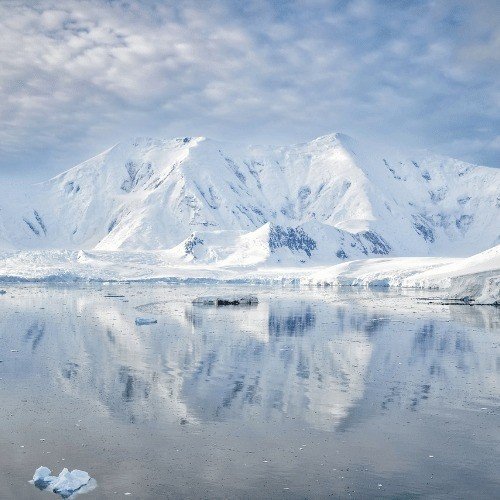
In an era where the planet’s health is increasingly precarious, the latest data on Antarctic sea ice serves as a stark reminder of the escalating Climate Change Impact. According to the National Snow and Ice Data Center (NSIDC), the Antarctic sea ice reached its third-lowest winter maximum extent on record this year, clocking in at just 17.16 million square kilometers. This alarming trend underscores how global warming is reshaping our polar regions, with far-reaching consequences for ecosystems, weather patterns, and human societies. As we delve into this development, it’s clear that the Climate Change Impact is not just a distant threat—it’s unfolding right now.
The Science Behind the Antarctic Sea Ice Slump
Sea ice around Antarctica is a vital component of the planet’s climate system, expanding dramatically during the Southern Hemisphere’s winter months to form a reflective blanket over the ocean. This ice helps moderate global temperatures by bouncing sunlight back into space, a process known as the albedo effect. But under the intensifying Climate Change Impact, this natural cycle is breaking down.
This September’s peak was just a hair above the record lows of 2022 and 2023, continuing a streak of three years with historically low extents. Experts attribute this to several interconnected factors amplified by Climate Change Impact:
Warming Oceans and Atmosphere: Greenhouse gases trap heat, raising ocean temperatures around Antarctica by up to 1°C in recent decades. Warmer waters erode ice formation from below, while milder air temperatures limit surface freezing.
Shifting Wind Patterns: The Southern Annular Mode (SAM), influenced by climate change, has become more persistent in its positive phase. This drives stronger westerly winds that push warmer subtropical waters southward, melting ice edges and preventing expansion.
Feedback Loops: As ice diminishes, the exposed dark ocean absorbs more solar radiation, accelerating local warming and creating a vicious cycle. Satellite data from NASA’s Aqua and Suomi NPP missions confirm this rapid transformation, with some regions showing ice loss rates exceeding 10% per decade.
Unlike the Arctic, where sea ice decline has been steady, Antarctica’s changes were more variable until the 2010s. Now, the Climate Change Impact is undeniable, with models from the Intergovernmental Panel on Climate Change (IPCC) predicting even steeper drops if emissions aren’t curbed.
Data Insights and Measurement Details
Extent vs. Volume: While sea ice extent (the total area with at least 15% ice cover) hit 17.16 million square kilometers, preliminary estimates suggest thinner ice overall, reducing total volume and making it more vulnerable to summer melt.
Regional Variations: The ice shortfall was most pronounced in the Weddell Sea and Bellingshausen-Amundsen Seas, where warmer ocean currents and reduced wind patterns failed to push ice northward, while the Ross Sea saw slightly above-average coverage.
Satellite Monitoring: Observations from NASA’s Aqua satellite and the European Space Agency’s Sentinel missions provide daily tracking, confirming the peak occurred on September 19, 2024, with anomalies persisting through the transition to spring.
Causes Linked to Climate Change
Ocean Warming: The Southern Ocean has absorbed over 70% of excess global heat from greenhouse gas emissions, raising surface temperatures by about 0.2°C per decade and melting ice from below through upwelling of warmer deep waters.
Atmospheric Shifts: A weakening polar vortex and altered wind patterns, influenced by climate change, have reduced the “ice factory” effect where cold air typically expands sea ice; additionally, increased precipitation as rain rather than snow adds freshwater that hinders freezing.
Human Influence Confirmed: Studies from the World Meteorological Organization (WMO) and IPCC attribute over 90% of the observed decline to anthropogenic climate change, with models showing that natural variability alone cannot explain the rapid drop since 2016.
Ecological and Global Impacts
Wildlife Disruptions: Emperor penguins, Adélie penguins, and krill-dependent species face breeding failures and food shortages, as seen in the 2022 record-low year when over 90% of colonies in some areas were affected; seals and whales also suffer from habitat loss.
Carbon Cycle Effects: Less sea ice reduces the ocean’s albedo (reflectivity), accelerating warming as darker open water absorbs more sunlight; it also releases stored carbon from thawing permafrost and alters phytoplankton blooms that sequester CO2.
Sea Level and Weather Ramifications: While Antarctic sea ice doesn’t directly raise sea levels (unlike land ice), its decline destabilizes the West Antarctic Ice Sheet, contributing to potential 3-5 meter rises by 2100; globally, it influences weather patterns, potentially intensifying storms in the Southern Hemisphere.
The Broader Implications of This Climate Change Impact
The shrinking of Antarctic sea ice isn’t just a polar problem—it’s a global one. Here’s how this climate change impact ripples outward:
1. Ecosystem Disruption
Marine life in the Southern Ocean depends on sea ice for survival. Krill, a keystone species that forms the base of the food web, thrive under and around the ice. Penguins, seals, and whales rely on krill populations, which have already declined by up to 80% in some areas due to reduced ice cover. As the ice retreats, these species face starvation, habitat loss, and disrupted breeding cycles. The ripple effects could cascade through the global food chain, affecting fisheries worldwide.
2. Rising Sea Levels and Coastal Threats
Antarctica holds about 90% of the world’s fresh water in its ice sheets. While sea ice itself doesn’t directly contribute to sea level rise (it’s floating and displaces its own volume), its decline signals instability in the larger ice shelves. These shelves act as buttresses for land-based glaciers; without them, more ice flows into the ocean, exacerbating sea level rise. Projections from the Intergovernmental Panel on Climate Change (IPCC) warn that unchecked warming could lead to 0.3 to 1 meter of global sea level rise by 2100, threatening coastal cities from Miami to Mumbai.
3. Weather and Climate Instability
The climate change impact on Antarctic sea ice influences weather far beyond the poles. The Southern Ocean’s heat distribution affects jet streams and storm tracks, potentially leading to more extreme weather events in the Southern Hemisphere. In Australia, South America, and even parts of Africa, we’ve seen links between Antarctic changes and intensified droughts, floods, and heatwaves. Globally, this contributes to the erratic patterns we’re witnessing, from record wildfires to unprecedented hurricanes.
4. Human and Economic Toll
Indigenous communities in the Southern Hemisphere, as well as global shipping and tourism industries, feel the pinch. Reduced sea ice opens new routes but heightens risks from unpredictable weather. More critically, the climate change impact amplifies food insecurity and displacement, with billions at risk from disrupted agriculture and rising oceans.
Combating the Climate Change Impact: Paths Forward
Faced with this sobering climate change impact, inaction isn’t an option—innovation and policy shifts are essential. Here’s how we can respond:
Cut Emissions Drastically: Accelerate the shift to renewables like solar and wind, aiming for net-zero by 2050 as per the Paris Agreement. Technologies such as carbon capture could buy us time.
Enhance Monitoring and Research: Investments in satellites like Europe’s Copernicus program and ground-based observatories will improve predictions. International collaborations, including the Antarctic Treaty System, foster data sharing.
Individual and Community Actions: Reduce your carbon footprint by choosing public transport, supporting sustainable brands, and voting for green policies. Grassroots movements, like those advocating for marine protected areas around Antarctica, amplify change.
Policy Advocacy: Push for stronger regulations on fossil fuels and subsidies for clean energy. The UN’s COP conferences provide platforms to hold nations accountable.