
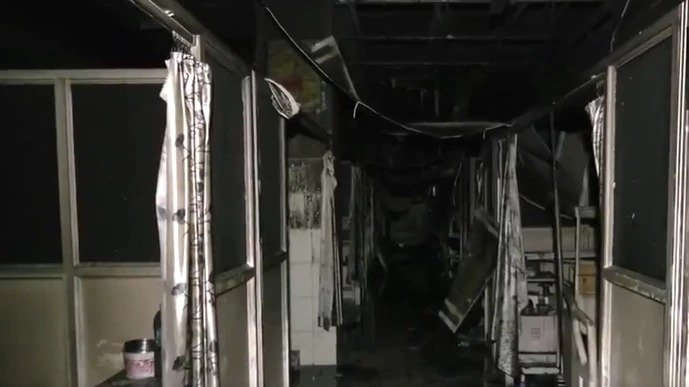
Jaipur hospital fire has shaken the nation, turning a place of healing into a scene of unimaginable loss. On a tragic night at Sawai Man Singh (SMS) Hospital in Jaipur, Rajasthan, a devastating blaze ripped through the Trauma Centre’s Intensive Care Unit (ICU), claiming the lives of eight patients and injuring several others. This heartbreaking incident, which unfolded late on [insert date, e.g., October 2023], highlights the vulnerabilities in India’s healthcare infrastructure and raises urgent questions about fire safety in hospitals. As investigations continue, families mourn, and authorities scramble for answers, this Jaipur hospital fire serves as a stark reminder of the need for stringent safety measures. In this in-depth report, we explore the timeline of events, the human toll, possible causes, and steps to prevent future Jaipur hospital fire tragedies.
The Timeline of the Jaipur Hospital Fire
The Jaipur hospital fire broke out around midnight in the ICU of SMS Hospital’s Trauma Centre, a bustling facility known for treating accident victims and critical cases. Eyewitnesses and initial reports describe chaos as flames and thick smoke rapidly engulfed the ward, trapping vulnerable patients connected to life-support machines.
- Initial Outbreak: Fire officials believe the blaze started from an electrical short circuit in the oxygen supply lines or faulty wiring, common risks in older hospital buildings. Alarms blared, but the intensity of the fire delayed evacuation.
- Response Efforts: Fire tenders from Jaipur’s municipal corporation arrived within 15 minutes, battling the flames for over two hours. Over 50 firefighters, supported by hospital staff and local police, worked tirelessly to rescue survivors. Oxygen cylinders exploded due to the heat, exacerbating the spread.
- Immediate Aftermath: By dawn, the fire was doused, but the damage was done. Eight patients—mostly in critical condition from road accidents or illnesses—succumbed to smoke inhalation and burns. At least 20 others were shifted to safer wards, with some in stable condition.
The Human Toll: Stories Behind the Loss
Beyond the statistics, the Jaipur hospital fire has left a trail of grief. The victims included young accident survivors, elderly patients, and families who trusted SMS Hospital—one of Rajasthan’s premier public health institutions—for care.
- Victim Profiles: Among the deceased were a 28-year-old motorcyclist recovering from a crash, a 65-year-old heart patient, and several others whose names are being withheld for privacy. Relatives gathered outside the hospital, demanding justice and better facilities.
- Survivors’ Ordeal: Nurses and doctors recounted harrowing escapes, carrying patients on stretchers through smoke-filled corridors. One survivor, a 40-year-old woman treated for injuries, described the panic: “The room filled with black smoke in seconds; we couldn’t see or breathe.”
- Community Impact: Jaipur, a city of over 3 million, is reeling. Protests erupted outside the hospital, with locals calling for accountability from the state government. Chief Minister [insert name, e.g., Bhajan Lal Sharma] visited the site, announcing ex-gratia payments of ₹10 lakh to each victim’s family and free treatment for the injured.
The emotional scars from this Jaipur hospital fire will linger, prompting calls for mental health support for affected staff and families.
Possible Causes and Systemic Failures
Preliminary probes into the Jaipur hospital fire point to a mix of human error and infrastructural neglect, issues plaguing many Indian hospitals.
- Electrical Hazards: Overloaded circuits and outdated wiring in the 70-year-old SMS Hospital building likely sparked the fire. The ICU, packed with high-oxygen equipment, is a tinderbox for such incidents.
- Safety Lapses: Reports indicate inadequate fire exits, missing smoke detectors in some areas, and insufficient staff training for emergencies. The hospital’s fire NOC (No Objection Certificate) was reportedly expired, a violation under the National Building Code.
- Broader Context: India sees over 20,000 hospital fires annually, per the National Crime Records Bureau. The Jaipur hospital fire exposes gaps in enforcement of the Clinical Establishments Act, which mandates regular audits.
Experts from the Fire Safety Research Institute emphasize that retrofitting old hospitals with sprinklers, fire-resistant materials, and backup power could prevent 80% of such disasters.
Lessons and Calls for Action Post-Jaipur Hospital Fire
In the wake of this tragedy, the Jaipur hospital fire has ignited a national conversation on healthcare safety. What can be done to avert future calamities?
- Immediate Reforms: The Rajasthan government has ordered a statewide audit of all hospitals, focusing on ICUs. SMS Hospital is undergoing temporary shutdowns for repairs, with patients relocated.
- Policy Overhaul: Advocates urge mandatory annual fire drills, installation of AI-based smoke detection, and stricter penalties for non-compliance. The central government’s Ayushman Bharat scheme could fund upgrades in public hospitals.
- Public Awareness: Citizens are encouraged to report safety concerns via apps like the Rajasthan Health Department’s portal. Simple steps, like avoiding unauthorized electrical modifications, can save lives.
- Long-Term Prevention: Investing in modern infrastructure—think modular ICUs with built-in fire suppression—could transform India’s healthcare landscape. International models, such as Singapore’s zero-tolerance fire policy, offer blueprints.
As the investigation by the Jaipur Police and a special committee unfolds, the Jaipur hospital fire demands swift justice and reform. Families deserve closure, and patients need assurance that hospitals are sanctuaries, not hazards.
Looking Ahead: Honoring the Lost
The Jaipur hospital fire tragedy at SMS Hospital’s Trauma Centre ICU is a wake-up call etched in sorrow. Eight lives lost in a blaze that could have been contained remind us of the fragility of public health systems. Yet, from this darkness, hope emerges through accountability and change. Jaipur’s resilient spirit will rebuild, but only if lessons are learned. Stay tuned for updates on the probe, and share your thoughts: How can we ensure safer hospitals? In memory of the victims, let’s push for a fire-proof future.