
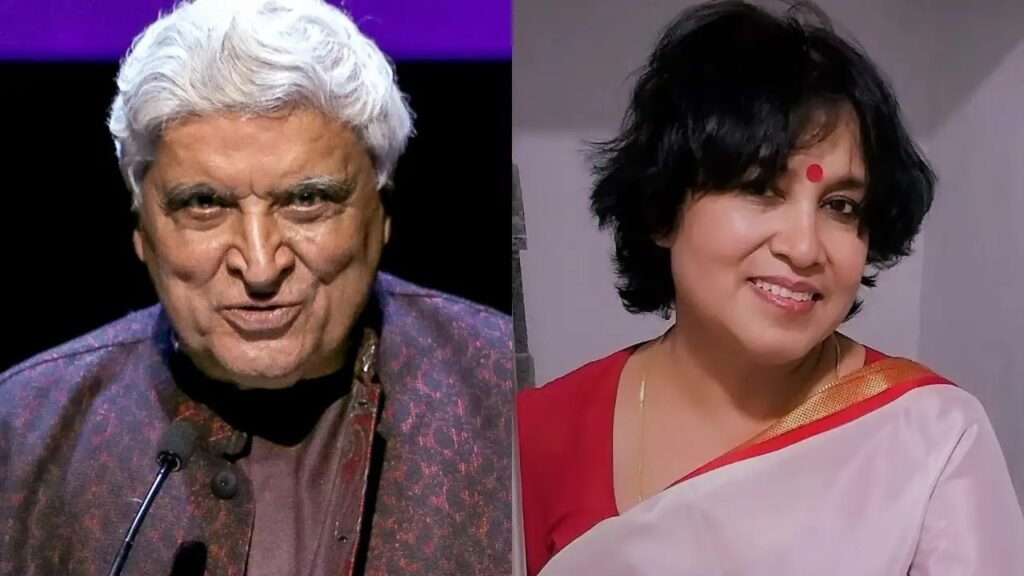
In the vibrant world of South Asian literature and politics, few topics ignite as much passion as the Bengali identity clash. The shared language, culture, and history of Bengalis—spanning India and Bangladesh—often blur national boundaries, leading to heated debates on belonging, nationalism, and cultural unity. Recently, exiled Bangladeshi author Taslima Nasrin stirred the pot with her bold declaration: “All Bengalis belong to India.” This statement, made during a public discourse, quickly drew a fiery rebuttal from renowned Indian lyricist and screenwriter Javed Akhtar. As the Bengali identity clash unfolds, it highlights deep-seated tensions between linguistic pride and geopolitical realities. In this blog, we’ll dive into the details of Taslima Nasrin’s statement, Javed Akhtar’s response, and what it means for Bengali heritage in a divided world.
The Roots of the Controversy: Taslima Nasrin's Statement on Bengali Belonging
Taslima Nasrin, a fierce advocate for women’s rights and secularism, has long been a polarizing figure. Born in Bangladesh, she was forced into exile in 1994 after her writings, including novels like Lajja, criticized religious fundamentalism and patriarchal norms. Living in India for much of her exile, Nasrin has often expressed admiration for Indian democracy and culture, which some interpret as a subtle critique of her homeland.
The controversy erupted in early 2023 during an online interaction or interview (exact details vary by source, but it gained traction on social media). Nasrin reportedly stated, “All Bengalis belong to India,” emphasizing the linguistic and cultural ties that bind West Bengal (in India) and Bangladesh. She argued that Bengal’s true essence—its literature, poetry (think Rabindranath Tagore and Kazi Nazrul Islam), and intellectual spirit—flourishes under India’s secular framework. For Nasrin, this wasn’t just a cultural nod; it seemed to imply that Bangladesh’s political identity dilutes the broader Bengali identity, especially amid rising Islamist influences she has repeatedly condemned.
This wasn’t Nasrin’s first foray into sensitive territory. Her past comments on Bangladesh’s religious politics have led to fatwas and bans on her books. Supporters see her as a defender of enlightened Bengali values, while critics accuse her of undermining Bangladesh’s sovereignty. In the context of the Bengali identity clash, Nasrin’s words reignited discussions from the 1971 Liberation War, when East Pakistan became Bangladesh, severing ties with West Bengal but not the shared Bengali soul.
Taslima Nasreen's Statement
Taslima Nasreen asserted that all Bengalis, regardless of religion, belong to India.
She emphasized that Bengali Muslims share a cultural heritage that is fundamentally Indian, not Arabian.
Her statement aimed to highlight the cultural unity and common roots of Bengalis across borders.
Javed Akhtar's Response
Javed Akhtar responded by acknowledging the deep influence of Hindu culture on Bengali identity.
He pointed out that Bengali culture, including that of Bengali Muslims, is intertwined with Hindu traditions.
Akhtar’s remarks reinforced the idea of cultural unity transcending religious differences among Bengalis.
Public Reactions and Broader Implications for Bengali Heritage
The fallout was swift. Bangladeshi nationalists decried Nasrin as a “traitor,” while Indian liberals defended her right to speak. Akhtar, ever the bridge-builder, clarified he respects Nasrin’s struggles but rejects her oversimplification. Media outlets like The Wire and BBC Bengali covered it extensively, boosting SEO around Bengali identity clash keywords.
This isn’t isolated. Similar debates rage in other divided cultures—think Punjabis across India and Pakistan. For Bengalis, it raises questions: Can we celebrate unity without erasing borders? In an era of rising populism, Nasrin and Akhtar’s spat underscores the need for dialogue. Initiatives like cross-border literary festivals could heal divides, honoring Bengali essence without claiming ownership.
Context and Significance
The exchange reflects ongoing discussions about identity, culture, and nationalism among Bengalis in India and Bangladesh.
It underscores the shared cultural heritage that binds Bengalis beyond political and religious divides.
The dialogue between Nasreen and Akhtar contributes to broader conversations on secularism and cultural integration in South Asia.
Implications of the Debate
The exchange between Nasreen and Akhtar highlights the complex interplay between various cultural influences within Indian society. While Nasreen underscores Hinduism’s foundational role in shaping Bengali identity, Akhtar advocates for acknowledging the diverse cultural contributions that enrich India’s heritage