
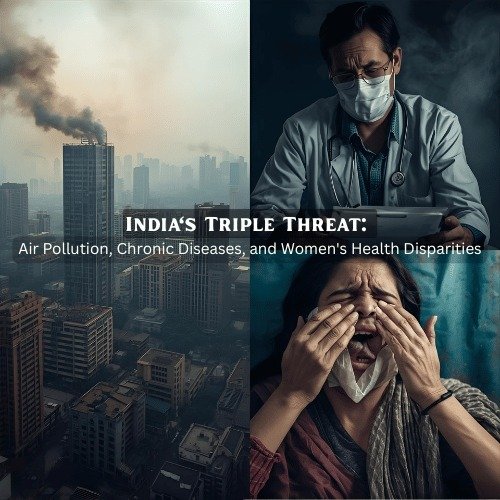
India, a nation of vibrant cultures and rapid growth, faces a silent crisis that’s eroding its future: India’s Ticking Triple Threat. This deadly triad—air pollution, chronic diseases, and women’s health disparities—intertwines to create a public health nightmare affecting millions. From the smog-choked streets of Delhi to rural villages in Uttar Pradesh, these issues don’t just coexist; they amplify each other, disproportionately burdening women and vulnerable communities. As India grapples with urbanization and industrialization, understanding and addressing India’s Ticking Triple Threat is crucial for sustainable health and equity. In this blog, we’ll unpack each element, explore their intersections, and highlight paths forward.
The Choking Skies: Air Pollution as the Catalyst
Air pollution in India isn’t just an environmental issue—it’s a health emergency fueling India’s Ticking Triple Threat. According to the World Health Organization (WHO), 14 of the world’s 15 most polluted cities are in India, with Delhi often topping the list for hazardous PM2.5 levels. In 2023, the Central Pollution Control Board reported that over 1.2 million deaths in India were linked to air pollution, primarily from vehicle emissions, industrial fumes, crop burning, and household cooking with solid fuels.
This toxic cocktail of particulate matter, nitrogen oxides, and ozone infiltrates lungs and bloodstreams, triggering inflammation and oxidative stress. For urban dwellers, it’s a daily assault; for rural women, it’s compounded by indoor pollution from chulhas (traditional stoves). The economic toll? A 2022 Lancet study estimated air pollution costs India $95 billion annually in lost productivity and healthcare expenses. As the spark igniting chronic diseases, air pollution sets the stage for the second prong of India’s Ticking Triple Threat.
Chronic Diseases on the Rise: Pollution's Long Shadow
Chronic diseases like respiratory illnesses, cardiovascular conditions, and diabetes are surging in India, with air pollution acting as the accelerant in India’s Ticking Triple Threat. The Indian Council of Medical Research (ICMR) projects that by 2030, non-communicable diseases (NCDs) will account for 75% of all deaths in the country—up from 60% in 2016. Asthma, COPD (Chronic Obstructive Pulmonary Disease), and lung cancer are particularly rampant, with a 2023 study in The Lancet Planetary Health linking short-term exposure to high pollution levels with a 20-30% spike in hospital admissions for heart attacks and strokes.
Why the explosion? Air pollution particles travel deep into the body, mimicking pathogens and weakening immune responses. In high-pollution hotspots like the Indo-Gangetic Plain, children and the elderly are hit hardest, but the ripple effects touch everyone. Diabetes, often tied to lifestyle but exacerbated by pollution-induced insulin resistance, affects over 77 million Indians, per IDF Diabetes Atlas 2021. This chronic burden strains an already overburdened healthcare system, where out-of-pocket expenses push 55 million people into poverty yearly (WHO data). As chronic diseases proliferate, they deepen the vulnerabilities in India’s Ticking Triple Threat, especially for women.
Women's Health Disparities: The Unequal Burden
Women in India bear the brunt of India’s Ticking Triple Threat, facing amplified risks from air pollution and chronic diseases due to systemic disparities. Gender norms often confine women to indoor and outdoor roles that expose them to pollutants—cooking over smoky fires, fetching water near traffic, or working in polluted fields. A 2022 UNICEF report revealed that Indian women inhale 3-4 times more indoor air pollution than men, leading to higher rates of anemia, reproductive issues, and maternal mortality.
Chronic diseases hit women harder too. Breast and cervical cancers, linked to environmental toxins, are rising, with the National Cancer Registry Programme noting a 30% increase in female cases over the past decade. Women’s health disparities extend to access: Only 19% of rural women have health insurance (NFHS-5, 2019-21), and cultural stigmas delay care for conditions like PCOS or hypertension. During pregnancy, pollution exposure raises risks of low birth weight and preterm births by 15-20% (per a JAMA Pediatrics study). In essence, India’s Ticking Triple Threat isn’t gender-neutral—it’s a gendered crisis, widening the gap in life expectancy and quality of life between men and women.
The Interconnected Web: How the Triple Threat Multiplies
What makes India’s Ticking Triple Threat so insidious is its synergy. Air pollution doesn’t just cause chronic diseases; it worsens them while exploiting women’s health disparities. For instance, a polluted environment heightens asthma in women, who then face barriers to treatment due to economic dependence or family duties. In low-income households, where 70% of women lack formal employment (World Bank, 2023), chronic illnesses trap families in poverty cycles.
Climate change adds fuel to the fire, intensifying pollution through wildfires and dust storms, while urban migration swells city populations without adequate infrastructure. The COVID-19 pandemic exposed these cracks: Women in polluted areas had 25% higher mortality rates from respiratory complications (ICMR data). Economically, this triad could shave 2-3% off India’s GDP by 2050 if unchecked (Asian Development Bank projections). Breaking this web requires holistic action.
Pathways to Defuse the Threat: Solutions and Hope
Tackling India’s Ticking Triple Threat demands multi-level interventions, blending policy, technology, and community empowerment. Here’s how we can turn the tide:
Clean Air Initiatives: Expand the National Clean Air Programme (NCAP) with stricter enforcement on stubble burning and vehicle emissions. Promote electric vehicles and green urban planning—cities like Surat have reduced PM levels by 40% through tree-planting drives.
Chronic Disease Management: Invest in universal health coverage via Ayushman Bharat, which has covered 500 million people. AI-driven early detection tools, like those piloted in Kerala for diabetes screening, can personalize care and reduce burdens.
Empowering Women’s Health: Launch targeted programs like the Pink Bus initiative for rural cancer screenings. Promote clean cooking fuels under the Ujjwala scheme, which has distributed 100 million LPG connections, cutting indoor pollution by 50% in beneficiary homes. Education campaigns to challenge gender norms can boost women’s access to healthcare.
A Call to Action: Securing India's Health Future
India’s Ticking Triple Threat of air pollution, chronic diseases, and women’s health disparities is a wake-up call, but it’s not inevitable. With decisive steps, India can transform this crisis into an opportunity for equitable, resilient health systems. Policymakers must prioritize funding—India’s health budget is just 2.1% of GDP, far below the 5% global benchmark. Individuals can contribute by advocating for clean air, supporting local cleanups, and demanding gender-sensitive policies.
As India aims for Viksit Bharat by 2047, addressing this triple threat is non-negotiable. Let’s defuse the bomb before it explodes. What role can you play in combating India’s Ticking Triple Threat? Share your thoughts in the comments, and join the conversation for a healthier tomorrow.