
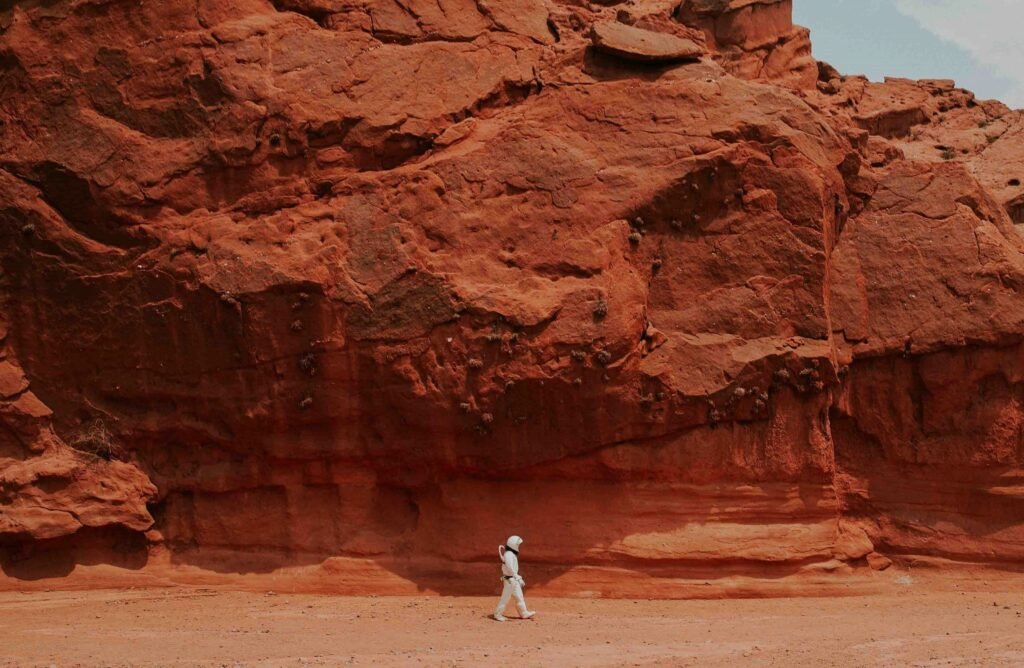
NASA‘s Perseverance Rover is a robotic scientist that explores Mars’ Jezero crater, searching for signs of ancient life and studying the planet’s geological past.
NASA's Perseverance Rover: Unearthing Mars' Ancient Secrets in Jezero Crater
NASA‘s Perseverance rover, which landed on Mars in February 2021, continues to revolutionize our understanding of the Red Planet’s history by collecting rock samples and analyzing geological features that hint at a wetter, potentially habitable past.
Recent findings from the rover’s instruments, including the SHERLOC (Scanning Habitable Environments with Raman and Luminescence for Organics and Chemicals) and PIXL (Planetary Instrument for X-ray Lithochemistry), have identified organic molecules and minerals suggestive of ancient microbial life.
The mission focuses on Jezero Crater, a 45-kilometer-wide site believed to have been a lake fed by a river delta over 3.5 billion years ago, providing ideal conditions for preserving signs of past life.
Key Discoveries from Recent Sample Collections
Evidence of Ancient Water Flows: Perseverance has imaged layered sedimentary rocks in the crater’s delta, showing clear signs of prolonged water activity, including ripple marks and mineral deposits like carbonates that form in watery environments.
Organic Compounds Detection: The rover detected complex organic molecules in a rock sample named “Cheyava Falls,” including carbon-based structures that could be biological remnants, though abiotic origins (non-life processes) remain possible; these are the most compelling biosignatures found to date.
Volcanic and Hydrothermal Clues: Analysis of igneous rocks reveals interactions with hot water, similar to Earth’s hydrothermal vents where life may have originated, suggesting Mars had dynamic geological processes billions of years ago.
Technological Innovations Driving the Mission
Sample Caching for Return: Perseverance has collected and sealed 24 rock and soil samples in titanium tubes, part of the Mars Sample Return mission planned for the 2030s in collaboration with ESA (European Space Agency), which could bring them back to Earth for detailed lab analysis.
Advanced Imaging and Spectroscopy: The rover’s Mastcam-Z provides high-resolution 3D panoramas, while SuperCam uses lasers to vaporize rocks and detect chemical compositions from afar, enabling remote identification of potential habitability zones.
Autonomous Navigation: Upgraded AI allows Perseverance to avoid hazards and select science targets independently, covering over 28 kilometers since landing and drilling 24 cores without human intervention.
Implications for Mars Exploration and Life Search
These discoveries bolster the hypothesis that Mars was once Earth-like, with a thicker atmosphere, liquid water, and possibly microbial ecosystems, challenging the view of it as a barren world.
NASA scientists emphasize that while no definitive proof of life has been found, the samples could confirm ancient habitability or even fossilized microbes upon return, informing future human missions.
The findings also aid in understanding planetary evolution, with parallels to early Earth, and support NASA’s Artemis program by testing technologies for crewed Mars trips in the 2030s.
Future Plans and Global Collaboration
Perseverance is set to explore the crater rim for older rocks and potential impact-related minerals, with operations extending until at least 2028, pending funding.
International partners, including contributions from France, Spain, and Canada for instruments, highlight the collaborative effort; public engagement includes raw image releases and virtual rover tours via NASA’s website.
Mission leads anticipate that combining Perseverance’s data with orbital observations from MAVEN and Mars Reconnaissance Orbiter will paint a fuller picture of Mars’ transition from habitable to arid.
This ongoing mission underscores NASA’s commitment to astrobiology, bringing us closer to answering whether life ever existed beyond Earth and paving the way for humanity’s next giant leap into the solar system.
Broader Implications for Space Exploration
Perseverance Rover Mars isn’t isolated; it ties into exoplanet searches and SETI efforts. If ancient life is confirmed, it implies life’s resilience, boosting odds for extraterrestrial biology. Educational outreach, like the rover’s naming contest won by a 12-year-old, inspires global STEM engagement.
In summary, Perseverance Rover Mars continues to deliver groundbreaking insights, turning sci-fi into science. As it roams Jezero, each finding edges us closer to answering: Was Mars once alive?